Phone : +91 98251 83643
Email : info@swatiwater.com
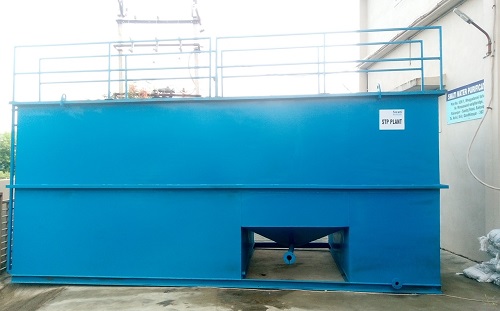
Swati Water is a leading Sewage Treatment Plant Manufacturer in India, providing advanced, reliable, and eco-friendly wastewater treatment solutions for residential, industrial, and commercial sectors. Our STP Plants are designed using modern technology to ensure maximum purification, lower maintenance, and long operational life.
A Sewage Treatment Plant (STP) is a wastewater treatment system that removes contaminants, impurities, organic waste, and harmful microorganisms from domestic and industrial sewage. It helps convert polluted wastewater into clean, reusable water. Sewage treatment prevents water pollution, protects natural resources, avoids foul smell and diseases, and supports sustainability. Every residential or industrial establishment that generates wastewater must install an STP to meet environmental compliance and pollution control board norms.
Sewage Treatment Plants are designed to handle different volumes of wastewater depending on the requirement of residential, commercial, and industrial sectors. Common STP capacities include:
Standard Treatment Capacities
Available Capacity Range
10 KLD, 15 KLD, 20 KLD, 25 KLD, 30 KLD, 40 KLD, 50 KLD, 65 KLD, 75 KLD, 80 KLD, 100 KLD, 150 KLD, 175 KLD, 200 KLD, 250 KLD, 300 KLD, 350 KLD, 400 KLD, 450 KLD.
Capacity Classification
Small Scale STPs:
Medium Scale STPs:
Large Scale STPs:
• Used Oil / Mining Industry: For treating wastewater containing oils, grease, sediments, and contaminants.
• Hospitals & Healthcare: Treating wastewater containing pathogens, chemicals, disinfectants, and pharmaceuticals.
• Dairy & Beverage Industry: Managing wastewater with high organic load, fats, oils, and sugars.
• Petrochemical Industry: Treating wastewater with hydrocarbons, chemicals, and processing effluents.
Sequencing Batch Reactors (SBR) – SBR is an advanced wastewater treatment technology that operates in batches instead of continuous flow. It works on the activated sludge principle but in a fill-and-draw sequence, including phases such as filling, aeration, settling, and decanting. This process ensures efficient removal of organic pollutants and is ideal for varying wastewater loads.
Membrane Bioreactors (MBR) – MBR technology combines biological wastewater treatment with membrane filtration to deliver superior effluent quality. The biological process breaks down contaminants, while the membrane filters separate solids from treated water. MBR systems produce high-purity, reusable water, making them suitable for industries needing stringent discharge standards, though they involve higher installation and operational costs.
Moving Bed Biofilm Reactors (MBBR) – MBBR treatment uses biofilm carriers in aeration tanks to promote microbial growth. As these carriers move freely in the tank, bacteria degrade organic pollutants efficiently. MBBR systems are compact, energy-efficient, and require low maintenance, making them more effective than traditional activated sludge processes.
An STP, also known as a wastewater treatment plant, is a facility that cleans wastewater from toilets, sinks, and tubs.
A sewage treatment plant works by holding back large solids and debris from the wastewater within the primary settlement tank. The wastewater then goes through the biological zone where bacteria and microorganisms break down and consume the organic matter.
It is important to have a sewage treatment plant to prevent environmental pollution, protect public health and promote sustainable water use.
Sewage treatment plants collect, treat, and discharge wastewater, providing a service essential to environmental and public health.