Phone : +91 98251 83643
Email : info@swatiwater.com
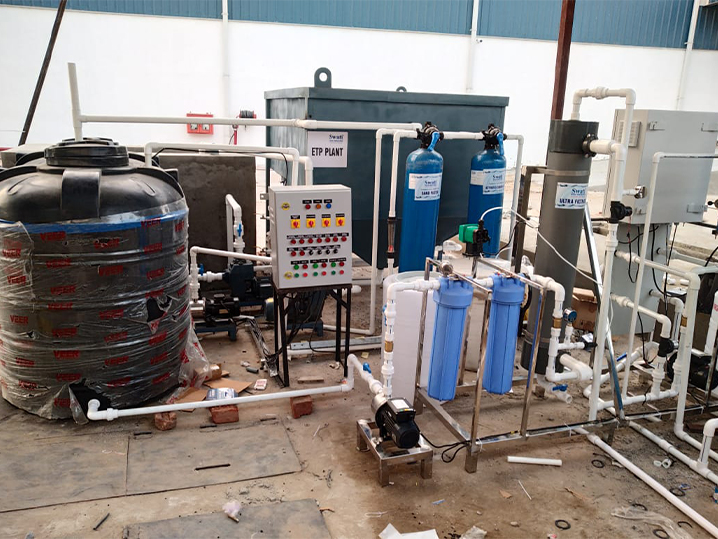
Swati Water Purification is a trusted name in Ahmedabad, renowned for manufacturing high-quality Effluent Treatment Plants (ETPs). Our ETP systems play a vital role in treating industrial wastewater and sewage generated from both commercial and domestic sources. As a leading packaged ETP plant manufacturer, we provide efficient and compact solutions that are ideal for small and medium-scale industries. These systems eliminate the need for large treatment areas and help in managing effluent disposal effectively.
Swati Water’s ETPs are widely used across various sectors, including hospitals, hotels, shopping malls, manufacturing units, and the automobile industry. These advanced systems are engineered to remove a wide range of pollutants such as organic compounds, suspended solids, toxic and non-toxic substances, polymers, dirt, and grit. Using modern treatment methods like evaporation, filtration, drying, and chemical processing, our plants ensure the complete purification of industrial effluents. This not only protects the environment but also supports water recycling initiatives by making treated water reusable for non-potable purposes. Effluent Treatment Plants are essential for maintaining a clean, safe, and sustainable environment. Swati Water Purification remains committed to delivering efficient, reliable, and eco-friendly ETP solutions tailored to your industry’s needs.
Effluent Treatment Plants are designed to treat industrial wastewater generated from various manufacturing and processing operations. The capacity of an ETP depends on the type of industry, volume of wastewater, and contamination levels.
ETPs are widely used in industries such as Paper & Pulp, Oil & Gas, Leather, Thermal Power Plants, Metal & Electroplating, Mining, Construction, Textile, Pharmaceutical, Food Processing, Chemical, and Municipal sectors.
1. Textile Dyeing, Printing & Garment Manufacturing
2. Pharmaceutical Industry
3. Food Processing & Beverage Industry
4. Chemical Manufacturing Industry
5. Municipal & Domestic Wastewater Treatment
An Effluent Treatment Plant (ETP) is a facility that treats industrial wastewater before it's released into the environment.
Effluent Treatment Plant (ETP) uses physical, chemical, and biological processes to purify industrial wastewater before it's released into the environment.
Effluent Treatment Plants or (ETP) are used by most of the companies in various industries to clean water and remove any toxic and non-toxic materials or chemicals from it so that that water can be reused.
Effluent Treatment Plant Industries use water in their production processes. For example, Pulp & Paper mills, water, cooling system, food & beverages, etc. Every industry needs to adhere to the government guidelines when they discharge the treated wastewater into the environment.